Money Management
Why Investors Panic Sell and How to Avoid It During Market Dips
27 Jan 2026
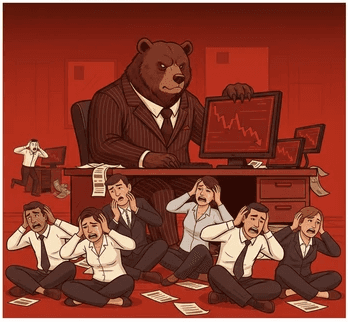
Panic selling does not usually happen because markets fall. It happens because investors are not prepared for what a fall feels like.
When portfolios decline sharply, the mind looks for relief. Selling feels like doing something sensible, even protective. In reality, it is often the most damaging decision an investor can make. Avoiding panic selling is less about predicting markets and more about building habits and structures that hold steady when emotions rise.
Start by redefining what a market dip actually means
A market dip is not a signal. It is a condition.
Equity markets are designed to move in cycles. According to the long-term index history, Indian equity markets have experienced frequent corrections and temporary drawdowns over the decades. Yet investors who stayed invested through these periods were rewarded over time. Corrections are not exceptions. They are part of the journey.
The mistake most investors make is treating a dip as new information rather than normal behaviour. When a dip is interpreted as danger instead of volatility, fear takes control.
Avoiding panic selling begins by accepting that discomfort is the entry price for long-term growth. If volatility feels abnormal, every dip will feel like a reason to exit.
Anchor decisions to goals, not market levels
One of the strongest ways to avoid panic selling is to stop thinking in terms of portfolio value and start thinking in terms of purpose.
Investments linked clearly to life goals feel different. A retirement goal that is fifteen or twenty years away does not depend on this year’s market performance. An education goal planned well in advance has time to recover from short-term declines. Near-term goals, when structured correctly, should not be exposed to high volatility in the first place.
This distinction matters. Panic selling increases when investors cannot answer a simple question during a dip: what is this money meant for?
Align risk with behaviour, not optimism
Most investors overestimate their comfort with risk during good times.
Avoiding panic selling requires honest risk alignment. Risk tolerance is not about chasing higher returns. It is about understanding how much volatility you can live with without feeling forced to act.
Portfolios that are built only for returns tend to break under stress. Portfolios built with emotional comfort in mind tend to hold. When volatility is expected and understood, fear loses its urgency.
This is not static. Risk capacity changes with income stability, responsibilities, and life stage. Therefore, it is ideal to review the portfolio as life's circumstances change and adjust it accordingly.
Build liquidity so you are never forced to decide under stress
Many panic sales are not driven by markets alone. They are driven by fear of needing cash.
Inadequate emergency reserves often lead families to tap into long-term investments when times are uncertain. When income feels uncertain or sudden expenses loom, selling equity during a market dip starts to feel necessary.
This is avoidable. Separating emergency funds from long-term investments creates breathing room. When short-term needs are covered, market volatility becomes easier to tolerate. Long-term investments are given time to recover instead of being sacrificed for immediate comfort.
Liquidity does not just protect finances. It protects decision-making.
Replace reaction with a repeatable process
Scheduled reviews create discipline. Rebalancing is not about timing markets. It is about maintaining alignment between goals, risk capacity, and asset allocation. During market dips, this discipline often works quietly in the investor’s favour.
During volatile periods, such as 2020, it was demonstrated that investors who remained invested and followed disciplined processes recovered more quickly than those who exited entirely. Structure outperformed instinct.
When decisions are made through routine rather than reaction, fear has less room to interfere.
Use a pause rule before any sell decision
One of the simplest and most effective ways to avoid panic selling is to slow the moment down.
Before selling during a market dip, pause and evaluate three things.
Whether your goals have changed.
Whether your income or liquidity situation has changed.
And whether your long-term risk capacity has genuinely changed.
If none of these foundations have shifted, selling usually addresses emotion, not risk.
This pause is powerful because it restores perspective. It reminds you that markets move faster than lives.
Accept volatility as the cost of long-term outcomes
Trying to eliminate volatility often means eliminating equity exposure. Eliminating equity exposure often means falling short of long-term goals.
Investors who remain invested through cycles fare better than those who attempt to avoid every downturn. The goal is not to feel calm all the time. The goal is to avoid making irreversible decisions during temporary discomfort. Preparation beats prediction every time.
Why personalised planning reduces panic
Generic advice tends to fail during stress. Personalised planning holds.
This is why we emphasise understanding the complete financial story before offering guidance. Every Basil Financials plan adapts holistically, taking into account goals, timelines, income patterns, and emotional comfort with risk. When plans are personal, investors are less likely to abandon them when markets dip.
Market corrections will continue to happen. Panic selling does not have to. Your life is unique, so your investments should be too. Speak with a Basil Financials advisor and get your custom plan.