Financial Planning
Building an Emergency Fund the Right Way | Basil Financials
2 Jan 2026
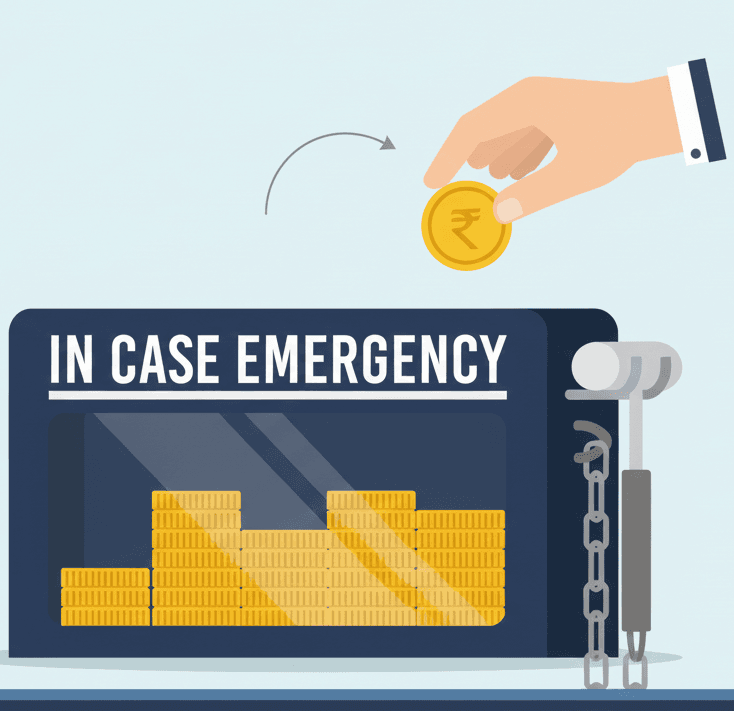
Life rarely gives advance notice before testing your finances. A medical expense, a sudden job transition, or an urgent family responsibility can appear without warning. When that happens, even well-intentioned investment plans can feel fragile.
Consider a dual-income household in their early thirties. Salaries are steady, SIPs are running, and long-term goals look on track. Yet most savings are tied up in long-term products. There is little cash available for immediate needs. In these cases, an unexpected expense can lead to tough choices. You might have to pause investments or borrow money at high interest. This is where an emergency fund becomes essential.
What an Emergency Fund Is and Why It Comes First
An emergency fund is money saved for unexpected costs. This helps you avoid disrupting your long-term financial goals. These costs can include medical bills, loss of income, urgent home repairs, or family obligations.
In recent years, many Indian households have had to rely on credit or early withdrawals from investments to manage unexpected expenses. While understandable, this approach often leads to long-term setbacks. Selling investments when the market is unstable or taking on high-interest debt can hurt your wealth in the long run. An emergency fund creates stability, allowing you to respond thoughtfully rather than react under pressure.
How Much to Set Aside Depends on Your Situation
Basic rules, such as setting aside six months of expenses, serve as helpful starting points. However, they don’t work for everyone.
Someone with a stable income and fewer dependents may be comfortable with three to six months of essential expenses. A single-income household, people with variable income, or families with dependents may need nine to twelve months of savings. The right amount depends on income stability, health needs, family duties, and current risk coverage.
This is why personalization matters. A meaningful financial plan considers your full context rather than applying a standard formula.
Emergency Fund and Risk Coverage Serve Different Roles
Emergency funds and risk coverage work together, but they are not substitutes.
Health insurance, life insurance, and disability cover protect you from major risks. However, insurance does not always provide immediate relief. Claims take time to process, deductibles apply, and certain costs may fall outside coverage.
An emergency fund bridges this gap. It supports day-to-day expenses while insurance mechanisms take effect. Without this buffer, people often dip into long-term investments or rely on credit. Emergency funds help prevent these situations by protecting investments during periods of stress.
Where to Keep an Emergency Fund
The purpose of an emergency fund is to be available, not to achieve aggressive growth.
In India, popular choices are savings accounts, sweep deposits, and SEBI-regulated liquid mutual funds. Each option differs in liquidity, taxation, and risk. The key is that funds should be easily accessible, stable, and separate from long-term investments.
Chasing higher returns with emergency money can defeat its purpose. When emergencies occur, access and certainty matter more than incremental yield.
How Emergency Funds Protect Long-Term Goals
Without an emergency fund, financial plans are often disrupted. Investors have paused SIPs, delayed retirement contributions, and filled the gap with short-term borrowing. Over time, these disruptions compound into missed opportunities.
A solid emergency fund keeps your investments safe, ensures insurance does its job, and helps you stay on track with long-term goals. Protection at the foundation allows growth to continue uninterrupted.
Integrating Emergency Planning Into a Financial Journey
Emergency planning is most effective when it fits into a broader financial framework.
A thoughtful process begins with understanding income, expenses, assets, liabilities, and family goals. Risk analysis is done individually. This is because risk tolerance and exposure can differ among family members. Asset allocation and growth strategies follow only after protection is in place.
This approach is not static. As income changes, responsibilities grow, or inflation raises expenses, you need to check your emergency funds and risk coverage from time to time. A carefully structured approach progresses alongside life's transitions.
Protect Before You Grow
Wealth creation is not only about choosing the right investments. It is also about building resilience so that unexpected events do not undo years of effort.
If there is uncertainty about how long current savings could support essential expenses, revisiting the foundation of a financial plan can bring useful clarity. This is often where structured financial planning, such as the approach followed at Basil Financials, helps connect protection, emergency reserves, and long-term goals in a practical way.
For those who prefer a guided, personalized review rather than generic advice, a goal-mapping exercise with Basil Financials can offer a clearer picture. Your life is unique, and your financial plan can reflect that.