Personal Finance
The Lazy Investor’s Smart Path With Index Funds & ETFs
30 Nov 2025
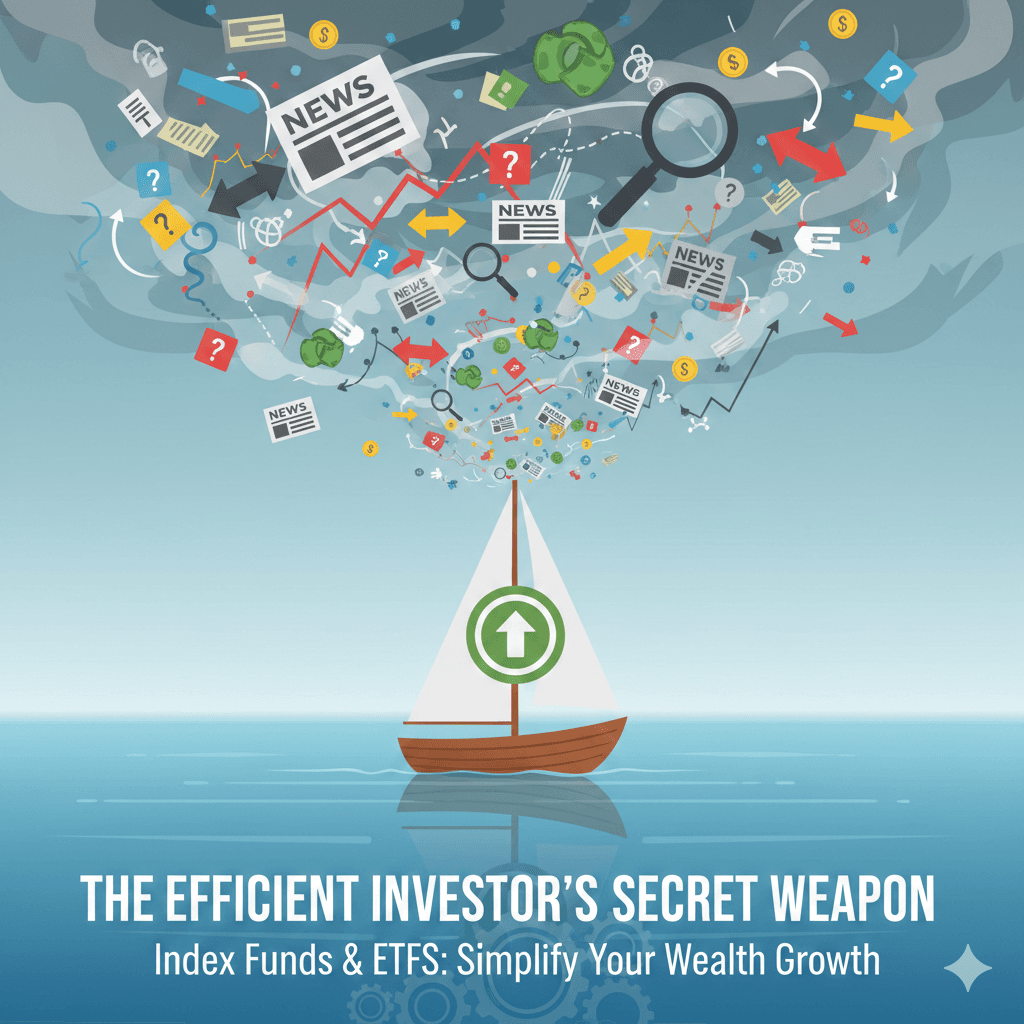
If you have ever felt overwhelmed by the stock market, you are not alone. You may start out full of enthusiasm, only to feel lost in the sea of market news, stock tips, and jargon. It is completely normal to want a simple way to make your money grow without tracking every market movement. That is exactly where index funds and ETFs can help. They are often called the lazy person’s way to invest, but in reality, they are the efficient investor’s secret weapon.
What Are Index Funds?
An index fund is a mutual fund that mirrors a stock market index such as the NIFTY 50 or the Sensex. Instead of trying to beat the market, it simply matches the performance of that index. This means you automatically own a piece of many companies with just one investment.
What Are ETFs?
An ETF (Exchange-Traded Fund) works similarly, but it trades on the stock exchange like a share. You can buy and sell it throughout the trading day at market prices.
Both investment products let you participate in the overall market without needing to choose individual stocks. In short, both investment solutions are simple, transparent, and low-cost ways to grow your wealth over time.
Why You Might Prefer Them
If you have limited time to track your investments, index funds and ETFs are ideal. They take away the pressure of making frequent decisions or chasing market trends. When you invest in one, you are automatically following the broader economy.
Another major benefit is cost efficiency. Since these funds are passively managed, their expense ratios are lower than most actively managed mutual funds. Lower costs mean more of your money stays invested and continues to compound.
And then there is transparency. You always know where your money is going because the fund follows a well-known index. There are no hidden decisions behind the scenes.
Why “Lazy” Can Actually Be Smart
The idea behind passive investing is not to ignore your money, but to give it space to grow. Even professionals find it difficult to consistently beat the market. By tracking an index, you align your returns with the average market growth, which has historically been steady over long periods.
The real trick is consistency. Regular SIPs (Systematic Investment Plans) into index funds or ETFs help you benefit from rupee-cost averaging. When prices fall, your SIP buys more units. When prices rise, you buy fewer. Over time, this balances out and smooths market volatility.
Should You Choose an Index Fund or an ETF?
Both serve the same purpose, but the experience differs slightly.
Feature | Index Fund | ETF |
How you invest | Through any investment or mutual fund app (no demat account needed) | Through investment apps linked to a demat account, as ETFs trade like shares |
Price updates | Once daily (based on end-of-day NAV) | Changes throughout the trading day with market prices |
Minimum investment | As low as ₹500 through SIP | Typically one unit (price varies by ETF) |
Best suited for | Investors who prefer automatic, hands-free investing | Investors are comfortable tracking market prices and using demat accounts |
If you like the idea of setting up a monthly SIP and letting it run automatically, index funds are perfect. If you prefer more control and want to trade during market hours, ETFs are worth exploring.
Why This Strategy Makes Sense for You
In India, investing habits are shifting. More people now prefer simple, data-backed strategies over chasing high-risk tips or short-term gains. Index funds and ETFs align perfectly with that change. They help you build wealth steadily while keeping your portfolio low-cost and diversified.
Recent SEBI regulations have made these products even more reliable by ensuring transparency and protecting investors from hidden risks. With digital investment platforms making access easier than ever, you can start small, stay consistent, and let compounding do the heavy lifting.
If you want a plan that keeps pace with India’s growth without demanding daily effort from you, this is the most practical place to begin.
Common Doubts You May Have
“Will I earn less with an index fund?”
Not necessarily. You might not capture every big winner, but you also avoid the risk of poor stock choices. Over time, matching the market tends to outperform inconsistent active bets.
“What happens if the market crashes?”
When markets fall, your regular SIP buys more units at lower prices. That can help you recover faster when markets rise again. Staying invested through ups and downs is what builds wealth.
“Can I combine passive and active investing?”
Of course. Many investors build a foundation with index funds for stability and add select active funds for specific goals. The key is to balance both based on your comfort with risk and time horizon.
How You Can Get Started
Begin by identifying your goals. Are you saving for retirement, your child’s education, or a future home? Your goals decide your ideal investment mix. Once you have clarity, choose one or two well-known index funds that track benchmarks like NIFTY 50 or Sensex.
You can start a SIP with as little as ₹500 each month. As your income grows, increase your contribution. The process is simple, but the results can be transformative when you stay consistent and give your investments time to compound.
You do not need to follow every market update or become a finance expert. What you need is a clear plan and the discipline to stay on course. Index funds and ETFs help you do just that.
The Bottom Line
Index funds and ETFs offer you a smart way to participate in market growth without stress or guesswork. They keep things transparent, low cost, and consistent. Whether you are new to investing or looking to simplify your portfolio, these funds can help you stay on track toward your goals.
At Basil, we believe your financial plan should grow with you. Speak to our advisors today and discover how simple, structured investing can bring your goals within reach.